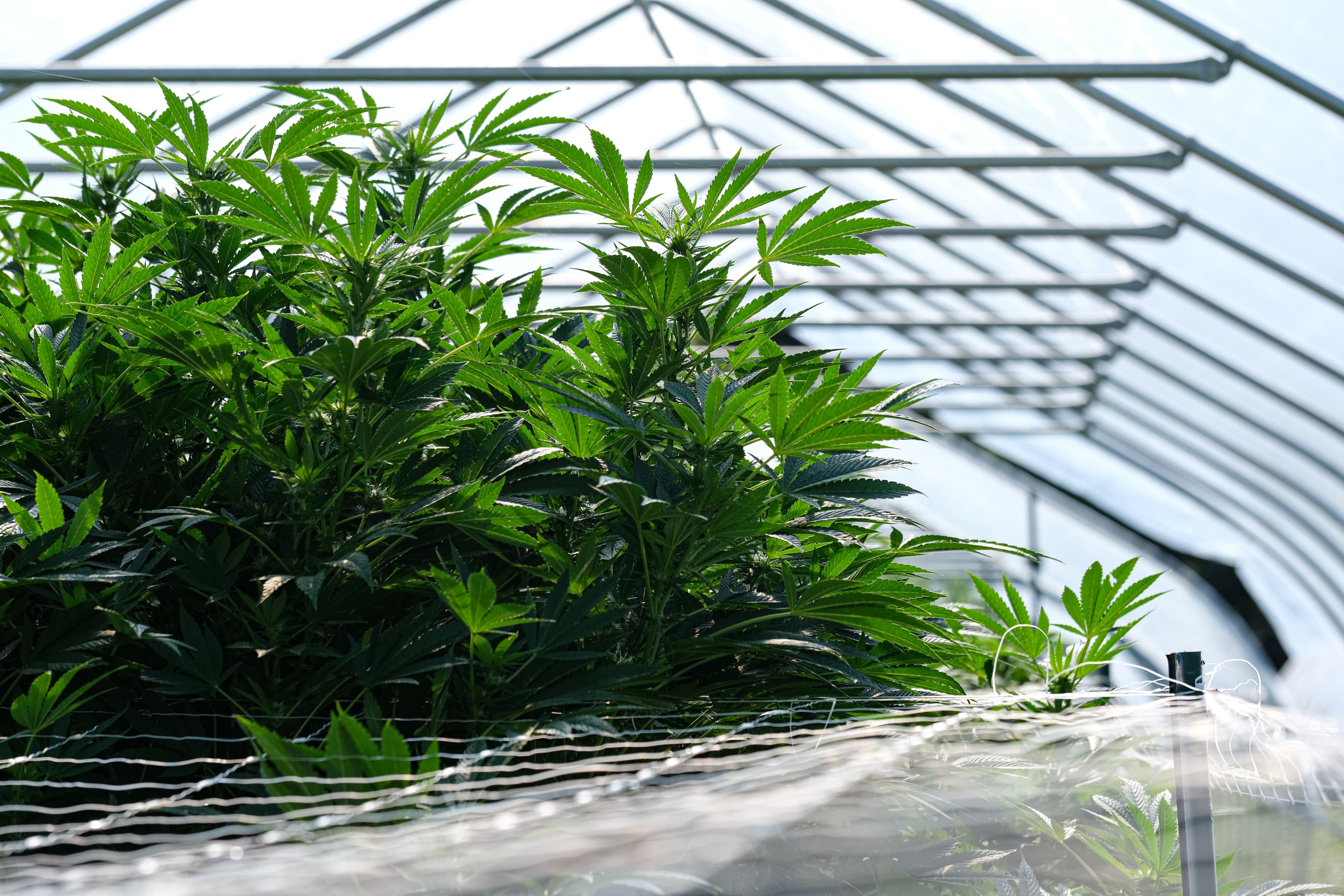
A Calendar, Not a Timer
Indoor cannabis operates on timers. Eighteen hours of light, flip to twelve, count the weeks, harvest, reset. The plant never knows what month it is. It doesn't experience spring or fall. It grows under a static sky of LEDs, harvested on a schedule dictated by the facility's production targets, not the plant's natural rhythm.
We grow differently. Our plants experience the full arc of a Maine year — the lengthening days of spring, the long golden light of summer, the shortening photoperiod of autumn that triggers flowering, and the hard frost that marks the end. They feel the weather. They respond to the season. And the flower they produce carries that experience in its terpene profile in ways that controlled-environment cannabis simply cannot replicate.
Here's what a year on the farm looks like.
Winter: December – March
Maine winters are no joke. From December through March, the ground is frozen, the beds are dormant under a blanket of mulch and cover crop residue, and the outdoor garden is essentially asleep. Temperatures regularly drop below zero. Snow covers everything.
But the farm doesn't stop. Winter is when we do our most important planning and preparation work.
Seed selection happens in the quiet months. We review the previous season's wash data, evaluate which cultivars performed best in the garden and at the press, and decide what new genetics to hunt in the coming year. Seeds are ordered, breeding plans are discussed, and the lineup gets finalized.
Soil preparation materials are sourced. We order rock dusts, kelp meal, neem cake, and other dry amendments that will be blended into our top-dress mixes for spring application. Compost piles from the previous fall are insulated and monitored — they'll resume activity as temperatures rise.
Propagation begins indoors in late winter. Clones are cut from our mother library and rooted under lights in a small indoor nursery. These plants will spend eight to twelve weeks establishing root systems and building structure before they go outside after last frost.
The garden may be buried under snow, but the next season is already underway.
Spring: April – May
Spring in Maine is a negotiation. April can bring snowstorms or sixty-degree days, sometimes in the same week. The ground thaws gradually, top to bottom, and the frost heaves that characterize Maine winters leave the soil surface rough and uneven.
Bed preparation begins as soon as the soil is workable — typically mid to late April. We rake back mulch, assess winter cover crop survival, and begin top-dressing with our amendment blends. In no-till beds, this is gentle surface work — nothing turns the soil, nothing disturbs the biological infrastructure below.
Compost application happens in late April. Finished compost from the previous fall's piles is screened and applied to bed surfaces at a rate of one to two inches. This feeds the biology as temperatures warm and microbial activity resumes.
Cover crop management is a spring ritual. Winter-surviving rye is chopped and dropped as mulch before it goes to seed. Crimson clover, if it survived, gets the same treatment at peak bloom. The decomposing green material feeds a burst of biological activity just in time for transplanting.
Hardening off the indoor clones begins in May. Plants are moved outside during the day and brought back in at night, gradually acclimating to outdoor conditions — UV exposure, wind, temperature swings — over a two-week period. Skipping this step results in shocked, sunburned transplants. Patience here prevents weeks of recovery time later.
Summer: June – August
After last frost — typically late May or early June in our part of Maine — the transplants go into the ground, and the real growing season begins.
Vegetative growth is explosive during Maine's long summer days. At our latitude, we get over fifteen hours of daylight at the solstice. The plants respond with rapid vertical growth and heavy lateral branching. This is when the canopy architecture is established — the framework that will support heavy flower production in the fall.
Training and maintenance are daily activities through summer. We prune lower branches to improve airflow, stake or trellis heavy limbs to prevent breakage, and monitor for pest pressure. Maine's pest load is lighter than most states, but we still scout for aphids, caterpillars, and the occasional thrip outbreak. Our pest management is entirely biological — beneficial insect releases, companion planting, and healthy soil biology that supports plant immune function.
Irrigation is managed carefully through the summer months. Maine typically gets adequate rainfall, but July can bring dry stretches that stress even well-mulched beds. We supplement with drip irrigation when needed, always using our clean well water directly without treatment or pH adjustment.
Compost teas are brewed and applied weekly during active vegetative growth. These microbial inoculants boost soil biology during the peak metabolic period, ensuring that nutrient cycling keeps pace with the plants' rapid growth demands.
Summer in the garden is about stewardship, not control. You've already built the soil. You've already chosen the genetics. Now you watch, respond, and let the system work.
Autumn: September – November
Fall is when everything comes together — and it all happens fast.
Flowering is triggered naturally by the shortening photoperiod. As days drop below fourteen hours in August, the plants begin transitioning from vegetative growth to flower production. By mid-September, the garden is in full bloom — dense canopy, heavy resin production, and terpene aromas so strong you can smell the garden from the driveway.
Harvest timing is the most critical decision of the year. We monitor trichome maturity daily through a jeweler's loupe, looking for the shift from clear to milky to amber heads that indicates peak ripeness. Harvest too early and you lose potency and yield. Harvest too late and you lose terpene volatiles and the delicate monoterpenes that define live rosin flavor.
In Maine, we're also racing the weather. The first hard frost can arrive anywhere from mid-October to early November, and a frost event on unharvested plants can damage trichome heads and degrade resin quality. We stagger our plantings and cultivar selection to spread the harvest window, reducing the risk of losing everything to a single cold snap.
Fresh-freezing happens within minutes of harvest. Plants are cut, trimmed of fan leaves, and placed directly into chest freezers at -40°F. There is no drying, no curing, no hanging. The flower goes from living plant to deep freeze as fast as physically possible, locking in the full volatile terpene profile at its absolute peak.
Fall planting of cover crops happens immediately in empty beds. As each section is harvested, cover crop seed goes down the same day. The window for establishing fall cover crops in Maine is narrow, and every day of growth before freeze-up matters.
The Full Circle
By November, the garden is quiet again. Cover crops are establishing in the beds. The fresh-frozen harvest is stored, waiting to be washed. Compost piles from harvest waste are built and starting to heat. The clones for next year's pheno hunts are rooting under lights indoors.
It's a cycle, not a process. Each season feeds the next. The cover crops that grow through winter will feed the soil that grows next year's cannabis. The compost from this year's stalks will become next year's top-dress. The wash data from this harvest will inform next year's genetics selection.
Growing with the seasons isn't just a philosophical stance. It's a practical reality that produces flower — and hash — with a character that controlled environments can't replicate. The plant experiences a full life, from the first warm day of spring to the first frost of fall. That experience is written in the resin, and you can taste it in every dab.