More Than Just a Number
Walk into any dispensary in America and watch how people shop. Most of them flip the package over, scan for the THC percentage, and grab whichever number is highest. It's understandable — THC is the one metric everyone knows, and more of it sounds like a better deal. But if you've ever smoked a 35% THC flower that hit like a wet napkin, or a 22% strain that absolutely floored you, then you've already experienced the limits of shopping by numbers alone.
The difference, almost always, comes down to terpenes.
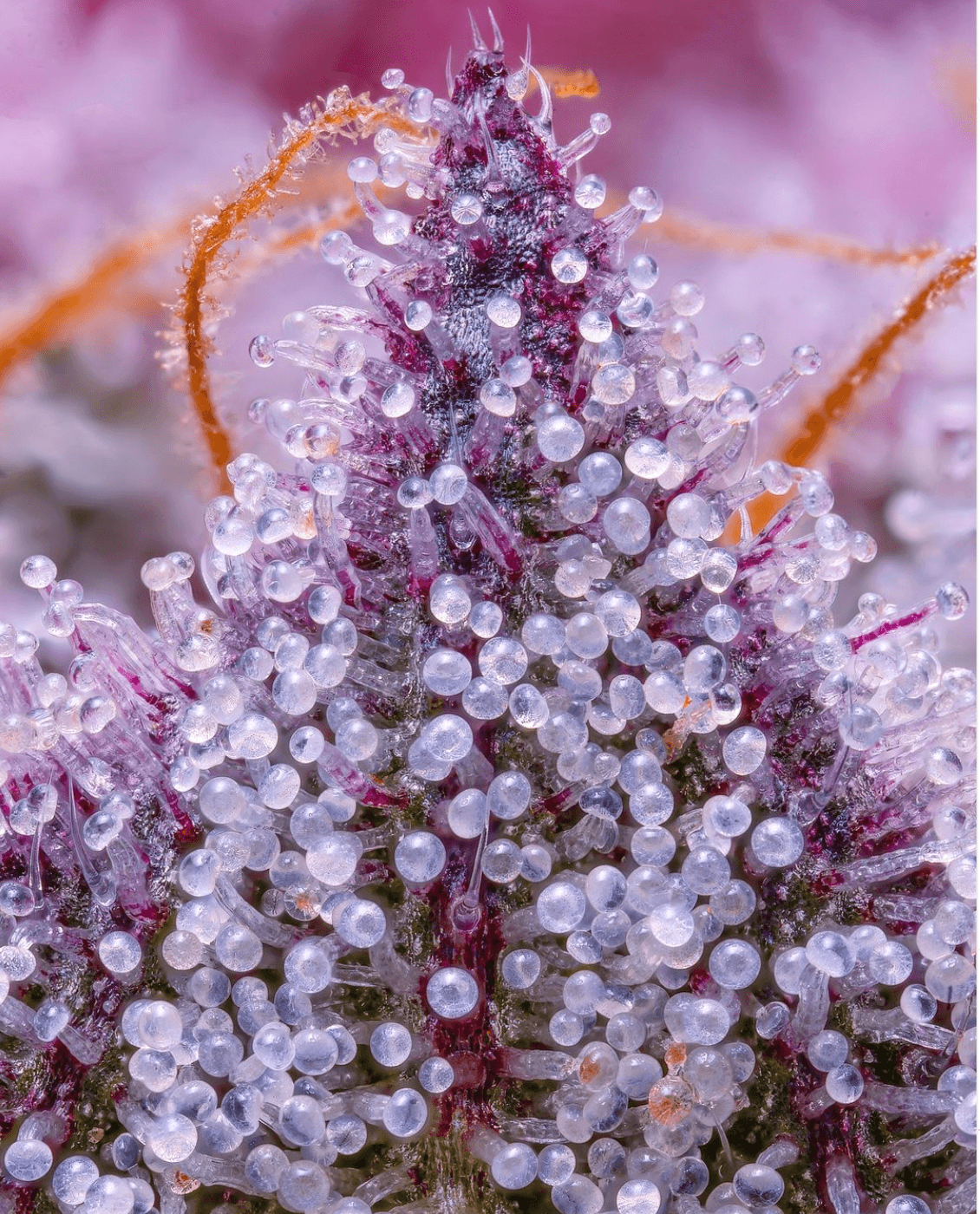
Terpenes are the aromatic compounds produced by the trichome glands of the cannabis plant — the same glands that produce cannabinoids like THC and CBD. They're responsible for the smell and flavor of every strain you've ever enjoyed, and they play a far more significant role in shaping your experience than most consumers realize. When a budtender tells you a strain is "gassy" or "fruity" or "earthy," they're describing terpenes. When you crack a jar and the smell fills the room, that's terpenes volatilizing into the air. And when one strain makes you want to clean the house while another glues you to the couch, terpenes are a major reason why.
What Terpenes Actually Are
Terpenes aren't unique to cannabis. They're one of the largest and most diverse classes of organic compounds found in nature, produced by plants, insects, and even some marine organisms. The lavender in your garden, the peel of an orange, the sap of a pine tree — all terpene-driven. Plants produce them primarily for defense (repelling pests, attracting pollinators) and environmental response (UV protection, temperature regulation).
In cannabis, terpenes are synthesized in the trichome heads alongside cannabinoids. The plant's genetics determine its potential terpene profile, but the growing environment — light spectrum, temperature, soil biology, stress exposure — shapes the final expression. This is why the same cultivar grown by two different farmers can smell and taste completely different, and it's a big part of why we obsess over our living soil program at Helios.
There are over 200 identified terpenes in cannabis, but most strains are dominated by a handful of primary compounds. Understanding these major players gives you a far better framework for predicting how a strain will taste, smell, and feel than any THC number ever could.
The Major Players
Myrcene is the most abundant terpene in cannabis, found in the majority of modern cultivars. It's the earthy, musky, slightly fruity note you recognize in strains like OG Kush and Granddaddy Purple. Myrcene is also found in mangoes, hops, and lemongrass. It's associated with relaxation and sedation — the classic "couch lock" terpene — and research suggests it may enhance cannabinoid absorption across the blood-brain barrier, effectively amplifying the overall effect.
Limonene is the bright, citrusy terpene that makes strains like Lemon Haze and Tangie smell like you're peeling a fresh orange. It's the second most common terpene in cannabis and is abundant in citrus rinds, juniper, and peppermint. Limonene-dominant strains tend to produce uplifting, energetic effects, and the compound has been studied for its potential anti-anxiety and mood-elevating properties.
Caryophyllene is one of the most interesting terpenes in cannabis because it's also a cannabinoid — it's the only known terpene that directly binds to CB2 receptors in the endocannabinoid system. It's the spicy, peppery note found in strains like GSC and Bubba Kush, and it's also the dominant aroma in black pepper, cloves, and cinnamon. Caryophyllene is associated with anti-inflammatory and analgesic effects, and its ability to interact with cannabinoid receptors makes it uniquely impactful.
Pinene is exactly what it sounds like — the fresh, sharp scent of pine needles. It's the most common terpene in the natural world, found in pine trees, rosemary, and basil. In cannabis, it appears in strains like Jack Herer and Blue Dream. Pinene is associated with alertness and mental clarity, and some research suggests it may counteract some of the short-term memory effects of THC.
Linalool is the floral, lavender-scented terpene found in strains like Lavender and Do-Si-Dos. It's well-studied for its calming and anti-anxiety properties — lavender aromatherapy isn't just folk medicine, and linalool is the compound doing the heavy lifting. In hash, linalool contributes a soft, perfume-like quality that rounds out harsher or more pungent profiles.
The Entourage Effect
You've probably heard the term "entourage effect" — the theory that cannabis compounds work better together than in isolation. This concept, first proposed by Dr. Raphael Mechoulam and Dr. Shimon Ben-Shabat in the late 1990s, is largely about terpenes.
The idea is straightforward: THC alone produces a certain effect. But THC combined with myrcene, caryophyllene, limonene, and a dozen other terpenes and minor cannabinoids produces a different, more complex, and often more desirable effect. The terpenes aren't passive passengers — they're actively modulating how cannabinoids interact with your receptors, influencing absorption rates, binding affinities, and neurotransmitter activity.
This is why a full-spectrum concentrate like live rosin often feels qualitatively different from a distillate, even at the same THC percentage. Distillate is essentially pure THC — the terpenes are stripped out during the refinement process and sometimes reintroduced artificially. Live rosin, by contrast, preserves the entire terpene profile as it existed in the living plant. You're getting the full entourage, not an approximation of it.
When you strip the terpenes, you strip the personality. THC is the engine, but terpenes are the steering wheel.
Why Terpenes Matter for Hash
For hash makers, terpene content isn't just a nice-to-have — it's the entire point. When we wash flower into bubble hash and press it into live rosin, we're concentrating the plant's essential oils. Every decision we make — from genetics to growing medium to harvest timing to pressing temperature — is oriented around preserving and amplifying terpene content.
This is also why solventless hash can vary so dramatically from batch to batch. Unlike hydrocarbon extracts, which can be remediated, color-corrected, and standardized through post-processing, live rosin is a raw expression of the input material. A strain with 4% total terpenes in flower will produce hash that tastes fundamentally different from a strain with 2%. And within that 4%, the specific ratio of myrcene to limonene to caryophyllene will determine whether the hash tastes like tropical fruit, diesel fuel, or fresh-cut wood.
At Helios, we select our cultivars with terpene production as a primary criterion. We don't just want plants that yield well — we want plants that produce complex, layered terpene profiles under our living soil conditions. Because at the end of the day, nobody remembers the THC percentage of the best dab they ever took. They remember the flavor.
Trust Your Nose
Here's the simplest piece of advice we can give: when you're shopping for flower or hash, smell it. If a dispensary won't let you smell the product, that tells you something. If the jar doesn't hit you with a wave of aroma the moment the lid comes off, that tells you something too.
Your nose is the best terpene analyzer you'll ever own. It's been trained by millions of years of evolution to detect and differentiate aromatic compounds. Learn to trust it. Pay attention to what you like, what strains make you feel good, and start connecting those preferences to the terpene profiles listed on the label. Over time, you'll develop an intuitive understanding of your own chemistry that no lab test can replicate.
THC gets you high. Terpenes determine what the high feels like. Once you understand that distinction, you'll never shop by numbers again.