The Harvest Window
There's a moment during harvest — maybe fifteen minutes long — where the cannabis plant is at its absolute peak. The trichomes are milky and swollen. The terpene glands are bursting with volatile oils. The plant smells so intensely of its genetic identity that you can distinguish cultivars from across the garden by scent alone. This is the moment the plant has been building toward for its entire life.
What you do in the next thirty minutes determines whether that peak is preserved or begins its irreversible decline.
Most cannabis operations harvest, hang, and dry. The plants are cut, stripped of fan leaves, and hung in a dry room for ten to fourteen days at controlled temperature and humidity. Then they're trimmed, cured in jars or bins for another two to four weeks, and eventually sold or processed. By the time that flower reaches a consumer or an extraction lab, it's been dead for a month or more.
We don't dry. We don't cure. We harvest and freeze — and the difference in the final product is not subtle.
What Drying Costs You
The drying process is fundamentally a controlled dehydration. You're removing moisture from the plant material slowly enough to prevent mold while fast enough to prevent degradation. When done well, it produces excellent smoking flower with complex flavors and smooth combustion. We're not here to argue that dried and cured flower is bad — it's not. It's a different product.
But drying costs you terpenes. Specifically, it costs you monoterpenes — the lightest, most volatile aromatic compounds in the plant's essential oil profile. These are the molecules responsible for the bright, sharp, fruity, and citrusy top notes that define a strain's aroma in the living garden. Myrcene, limonene, alpha-pinene, terpinolene — these compounds begin evaporating the moment the plant is cut, and they continue evaporating throughout the drying process.
Studies have measured terpene loss during drying at anywhere from 30% to 55% of total monoterpene content, depending on drying conditions. That's not a marginal loss. That's half the flavor, gone into the dry room exhaust fan.
The heavier sesquiterpenes — caryophyllene, humulene, bisabolol — are more stable and survive drying relatively intact. This is why dried and cured flower tends to have a deeper, spicier, woodier aroma compared to the bright, explosive scent of the living plant. You're smelling what's left after the volatile fraction has evaporated.
The best jar of cured flower in the world is a muted echo of what that plant smelled like alive. Fresh-frozen captures the whole song.
The Freezer Protocol
Fresh-freezing is conceptually simple but operationally demanding. The goal is to transition the plant from living to frozen as rapidly as possible, locking in the full volatile terpene profile at peak expression.
Here's our process:
Harvest happens in the early morning, before the day's heat causes trichome heads to soften and terpenes to volatilize. We cut whole branches, remove fan leaves in the field, and place the material immediately into turkey bags — thin, food-grade bags that protect the trichomes from physical damage during handling.
Transport to the freezer is measured in minutes, not hours. Our chest freezers are staged near the garden during harvest season, pre-chilled to -40°F. Every minute between cut and freeze is a minute of terpene loss. We operate with urgency.
Freezing happens rapidly in commercial chest freezers set to their lowest temperature. The bags of fresh material go directly into the freezer without any interim step. No pre-drying, no wilting, no flash-freezing in liquid nitrogen (though some operations use that). We rely on the consistent, deep cold of a well-maintained chest freezer to take the material below the point where enzymatic activity and volatile evaporation cease.
Storage is at a constant -40°F until wash day. The material can be stored frozen for months without meaningful degradation, as long as the temperature is maintained. We label every bag with cultivar, harvest date, and bed location for full traceability through the process.
Why Cold Matters
Temperature controls everything in the fresh-frozen equation.
At ambient temperature, terpene volatilization is continuous. The lighter monoterpenes have boiling points as low as 310°F, but they begin evaporating at room temperature through normal vapor pressure. The warmer the environment, the faster the loss.
At freezing temperatures, volatilization effectively stops. The terpene compounds are locked in the trichome head as a semi-solid resin, unable to escape into the atmosphere. The lower the temperature, the more complete the preservation. This is why we target -40°F rather than a standard freezer temperature of 0°F — the deeper the cold, the more volatile compounds are retained.
Cold also makes the trichome heads brittle, which is essential for the washing step that comes later. At -40°F, the resin glands become glassy and fragile, snapping cleanly off their stalks when agitated in ice water. Warmer frozen material is more pliable, and the heads don't separate as cleanly, resulting in lower yields and more stalk contamination in the hash.
The Living Plant Connection
Here's where fresh-frozen connects back to everything else we do on the farm.
The entire purpose of growing in living soil, under the sun, with organic inputs and natural pest management, is to produce flower with the most complex, abundant, and expressive terpene profile possible. Every decision in our growing process — from cover cropping to mycorrhizal management to cultivar selection — is oriented toward maximizing what the trichome glands contain at the moment of harvest.
Fresh-freezing is the bridge between the garden and the lab. It's the step that ensures all of that upstream work actually shows up in the final product. If we dried our flower, we'd lose 30-50% of the volatile terpenes we spent an entire growing season cultivating. The living soil, the sun exposure, the stress responses, the UV-driven resin production — half of it would evaporate in the dry room.
That's not an acceptable trade-off. Not for us.
From Freezer to Wash
The fresh-frozen material stays in the freezer until we're ready to wash. On wash day, bags are pulled from the freezer and placed directly into the wash vessel — a stainless steel container filled with near-freezing water and ice. The frozen material goes from -40°F storage into 34°F water, where gentle agitation separates the brittle trichome heads from the plant material.
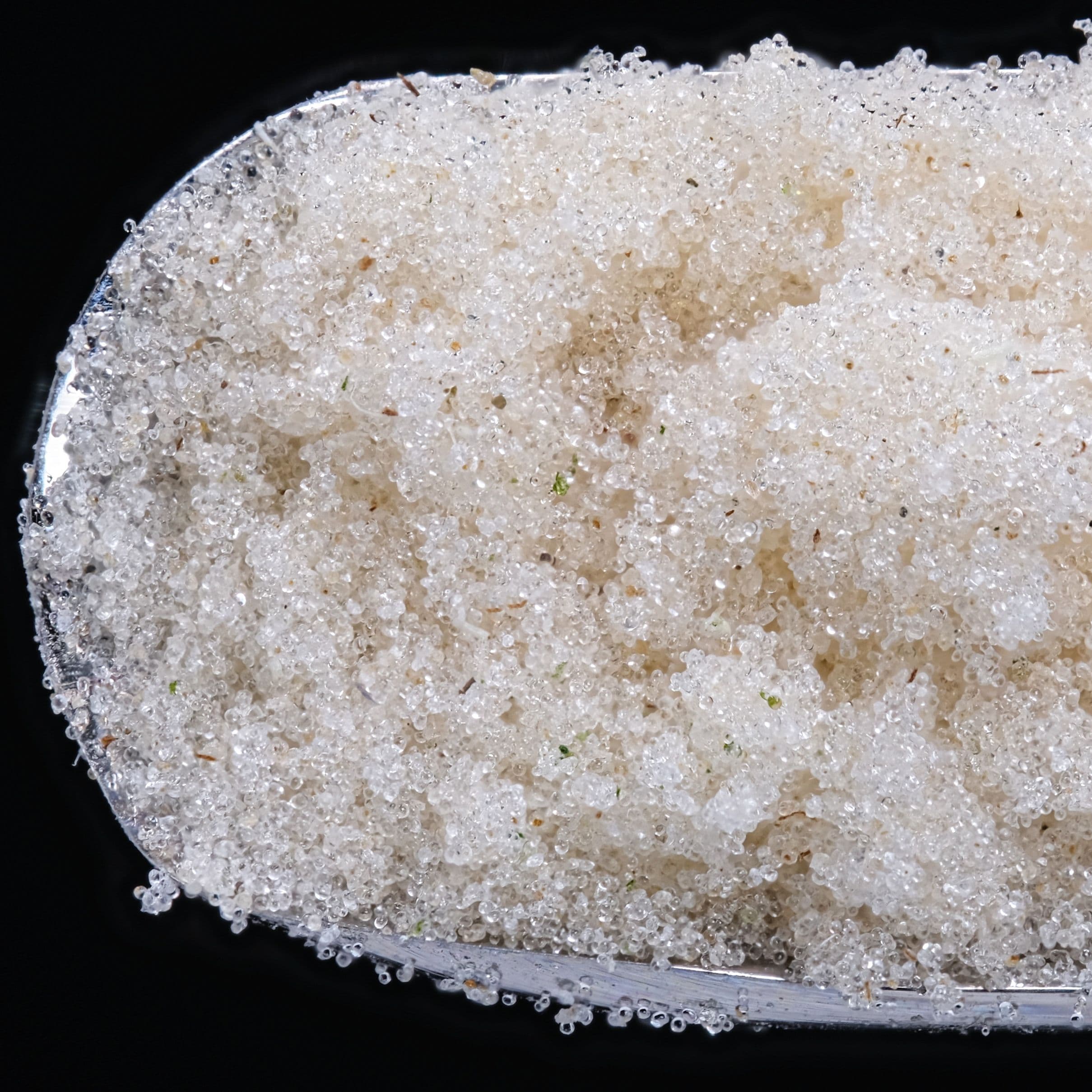
The result is bubble hash — the precursor to live rosin — made from material that has never been above freezing since the moment it was harvested. The full monoterpene fraction, the complete terpene and cannabinoid profile, the aromatic identity of the living plant — all of it is preserved in the hash, ready to be pressed into the most flavorful, full-spectrum concentrate possible.
This is what "live" means in live rosin. Not a marketing term. Not a style designation. A literal description of the starting material — flower that was frozen alive, at peak expression, and processed without ever warming up.
The flavor speaks for itself.