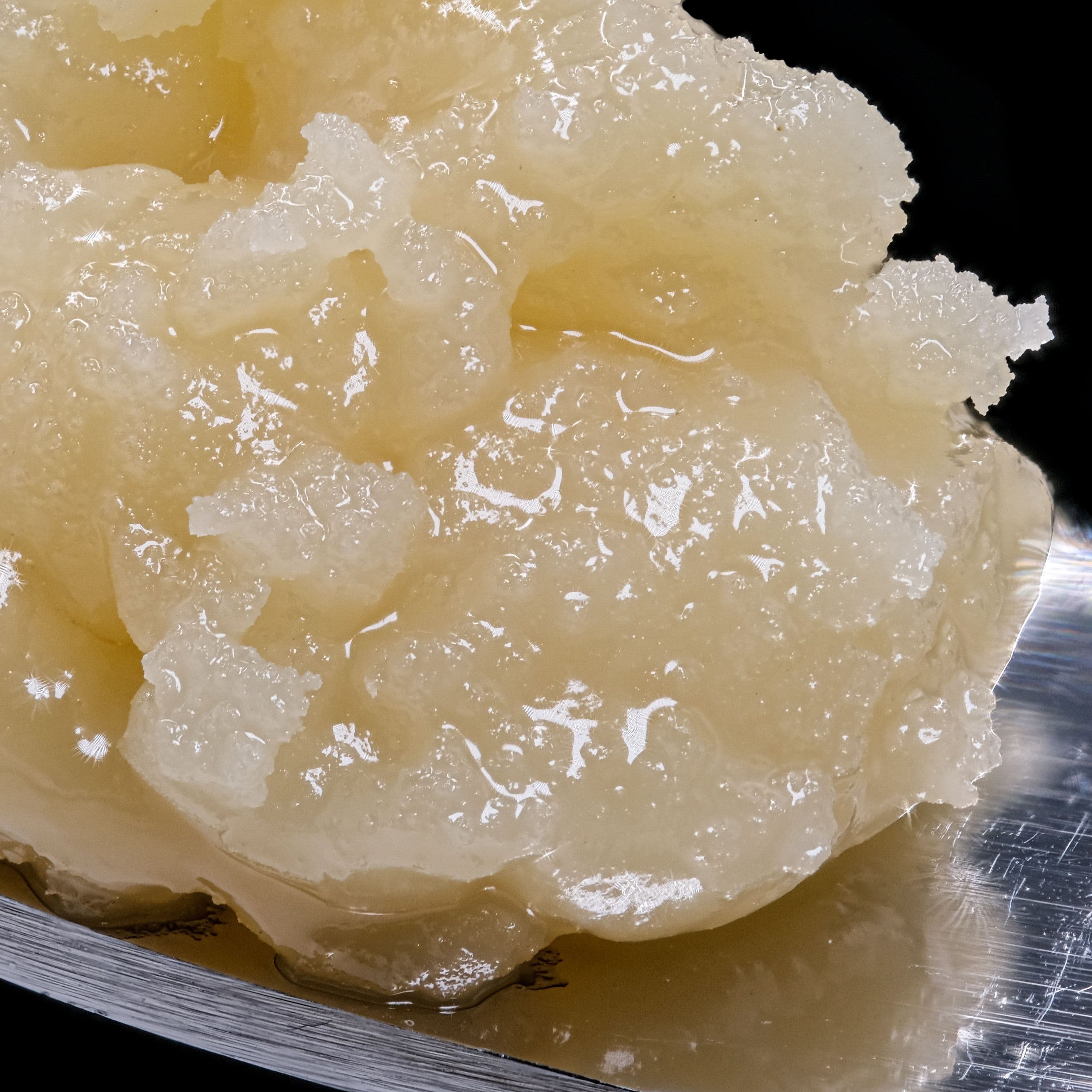
The Gold Standard
If you've spent any time in the concentrate world over the last few years, you've heard the term "live rosin" thrown around with an almost religious reverence. Dispensary menus list it at the top. Hash makers build entire brands around it. Consumers pay a premium for it without always understanding what makes it different from the dozen other concentrates on the shelf.
So what is live rosin, exactly? And why does it cost more than almost everything else in the case?
The short answer: live rosin is a solventless concentrate made from fresh-frozen cannabis that has been washed into ice water hash and then pressed with heat and pressure to produce a clean, terpene-rich extract. No butane. No propane. No CO₂. No ethanol. Just water, ice, heat, and screens. The result is a concentrate that faithfully represents the living plant — its flavor, its aroma, its full-spectrum effect — in a way that no other extraction method can match.
Why "Live" Matters
The word "live" in live rosin refers to the starting material: cannabis flower that was harvested and immediately frozen, rather than dried and cured in the traditional sense. This distinction is everything.
When cannabis is harvested and hung to dry, it begins losing volatile terpenes almost immediately. The monoterpenes — the light, fragrant compounds responsible for citrus, pine, and floral notes — are the first to go. Within days of hanging, a significant percentage of the plant's original terpene content has evaporated into the dry room. What you're left with is still good flower, but it's a muted version of what the living plant smelled like on the stalk.
Fresh-freezing changes the equation entirely. By harvesting the plant and placing it directly into a deep freezer (ideally at -40°F or below) within minutes, you lock in the full terpene profile at its peak. The trichome heads — those tiny, mushroom-shaped resin glands covering the flower — become brittle and glassy when frozen. This makes them easier to separate from the plant material during the washing process, and it preserves the volatile oils that would otherwise be lost to evaporation.
The "live" in live rosin isn't marketing. It's a fundamental process difference that produces a measurably different product.
The Wash: Ice Water Hash
Before you can make live rosin, you need to make bubble hash. This is the extraction step — where the trichome heads are physically separated from the plant material using nothing but ice-cold water and agitation.
The process works like this: fresh-frozen flower is placed into a vessel of ice water and gently agitated. The cold temperature makes the trichome stalks brittle, and the agitation snaps the heads free. The water — now carrying thousands of suspended trichome heads — is drained through a series of filter bags (called "bubble bags" or "wash bags") with increasingly fine mesh screens, typically ranging from 220 microns down to 25 microns.
Each bag catches trichomes of a different size. The most desirable heads — the ones with the highest ratio of resin to plant material — typically fall in the 73–120 micron range. This is often called "full melt" or "heads" because when dabbed on their own, they melt completely on the nail, leaving zero residue.
The collected hash is then carefully scooped from the screens, microplaned into a fine consistency to maximize surface area, and placed into a freeze dryer for 24–48 hours. Freeze drying removes all residual moisture without applying heat — preserving those volatile terpenes you worked so hard to retain by fresh-freezing in the first place.
The best hash makers in the world will tell you: washing is where the magic happens. You can't press your way out of a bad wash.
The Press: Turning Hash into Rosin
Once you have clean, dry, full-melt bubble hash, the final step is pressing it into rosin. This is done with a rosin press — a hydraulic or pneumatic machine that applies controlled heat and pressure to squeeze the resin out of the trichome heads.
The hash is loaded into a mesh filter bag (typically 25 or 37 microns), placed between sheets of parchment paper, and pressed at low temperatures — usually between 150°F and 200°F — for one to three minutes. The resin flows out of the bag as a translucent, golden oil that collects on the parchment.
Temperature and pressure are the two variables that define the final product. Lower temps preserve more terpenes and produce a lighter, more flavorful rosin. Higher temps increase yield but can sacrifice some of the more delicate volatile compounds. Every hash maker has their own preferences, and dialing in the press is part of the craft.
After pressing, the rosin is collected and "cured" — a process where it's sealed in a jar and allowed to nucleate and change texture over hours or days. Depending on the technique, the final product might be a creamy badder, a wet sauce, or a dry, crumbly consistency. Each has its fans, but the underlying product is the same: pure, solventless, full-spectrum cannabis resin.
Why Solventless Matters
There's a philosophical dimension to live rosin that goes beyond process. When you make live rosin, you are not introducing anything foreign to the plant. No chemical solvents. No post-processing additives. No CRC filtration to mask low-quality input material. What comes out of the press is a direct expression of what went into it — the genetics, the growing conditions, the harvest timing, the wash technique.
This transparency is a feature, not a limitation. You can't hide behind live rosin. If the flower wasn't grown well, the hash will be mediocre. If the wash was sloppy, the rosin will taste like plant matter. Every step in the chain is exposed in the final product, which is exactly why the best hash makers are obsessive about every detail.
For consumers, this means live rosin is one of the most honest products on the dispensary shelf. It's not an engineered experience — it's a concentrated version of the plant itself. The high is often described as more "full-spectrum" and nuanced compared to hydrocarbon extracts, which many users attribute to the preservation of the complete terpene and cannabinoid profile.
How We Do It at Helios
At Helios, live rosin isn't one product in a lineup — it's the entire philosophy. We grow our flower in living soil specifically to maximize terpene production. We harvest at peak trichome maturity and fresh-freeze within minutes. We wash in small batches, by hand, in near-freezing water. And we press at low temperatures to preserve every last drop of flavor.
The result is a concentrate that tastes like the living plant smelled in the garden. When you open a jar of our live rosin, you should be able to close your eyes and picture the flower it came from. That's the standard we hold ourselves to, and it's why we'll never take shortcuts with solvents, remediation, or mass production. The craft is the point.